← Application frontiers

BIOMEDICAL INTERFACES / ASSISTIVE SYSTEMS

Measure carefully. Support meaningful function.Human-facing sensing demands evidence.

Physical sensing can add information to prosthetic hands, mobility interfaces, pressure-management devices, medical instruments and wearable monitoring systems. Contact pressure, shear force, tissue interface changes and device motion are not reliably inferred from vision alone. Yet no measured signal is a clinical benefit until validated for a particular use.

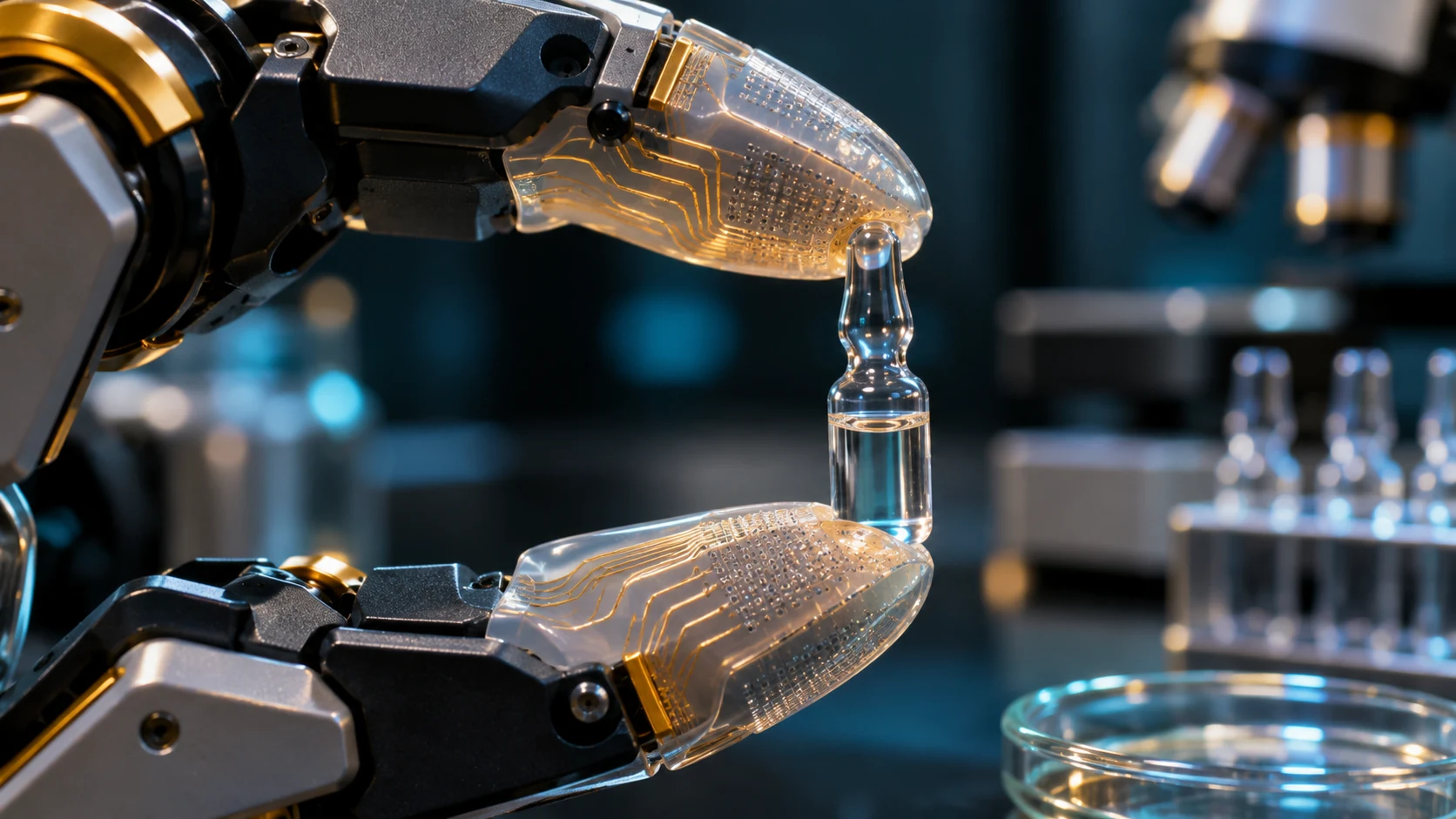
Conceptual robotic gripper with flexible tactile fingertips illustrating contact measurements for assistive technology research
Illustrative category image · not a specific commercial product

WHAT THE SIGNAL MEANS

Measurement first.
Useful intelligence follows.

Physical sensing can add information to prosthetic hands, mobility interfaces, pressure-management devices, medical instruments and wearable monitoring systems. Contact pressure, shear force, tissue interface changes and device motion are not reliably inferred from vision alone. Yet no measured signal is a clinical benefit until validated for a particular use.

Established: multiple categories of sensor-based medical and assistive equipment. Experimental/clinical evaluation: richer multimodal e-skin and sensory feedback.

CONTACTPressure, shear and motion cues
INTERFACEComfort, compatibility and durability
TRANSLATIONClinical evidence and device-specific oversight

ENGINEERING AND APPLICATION

Where it works.
Where it must prove itself.

Each sensing discipline has a distinct measurement stack, operational setting and commercialization test.

Prosthetics and tactile information

Sensorized prosthetic fingertips or limb interfaces may help detect object contact, foot loading and socket pressure. Conveying that information to a wearer is a separate challenge involving control systems and feedback design; research outcomes depend on task and user.

Medical instruments and assistive robotics

Surgical and rehabilitation systems may benefit from force and tactile feedback where visual information does not describe contact loads. This does not imply that all medical instruments need the same sensor or that a laboratory tactile array has undergone clinical validation.

Wearables and continuous measurement

Skin-facing sensors can capture motion, pressure, strain and physiological parameters. A viable platform needs stable measurements across skin tone, movement, environmental changes and long-duration use, as well as privacy, comfortable form factors and robust signal interpretation.

Regulation and professional evidence

A research sensor is not an authorized medical device. Device claims depend on intended use and jurisdiction; biocompatibility, electrical safety, data governance, human factors, clinical performance and postmarket responsibilities may apply.

COMMERCIAL CONTEXT

Potential buyers.
Specific operating needs.

Assistive technology ventures · Medical device integrators · Rehabilitation technology firms · Sensing-platform OEMs

Technical maturity

Established: multiple categories of sensor-based medical and assistive equipment. Experimental/clinical evaluation: richer multimodal e-skin and sensory feedback.

What a buyer funds

Reliable measurement, integration, validation and deployment support—not a sector label.

Independent identity

InvisibleSensors.com is a domain offering, not an operating manufacturer or equipment supplier.

INDEPENDENT TECHNICAL CONTEXT

Traceable principles.
Appropriate claims.

References support the application principles. No affiliation, product endorsement or clinical performance is implied.

DOMAIN ACQUISITION

InvisibleSensors.com

A premium digital identity available for strategic acquisition across advanced sensing and physical intelligence.

Submit a private enquiry ↗