← Application frontiers

SOLAR / PV / RESOURCE INTELLIGENCE

Measure the sun. Understand the system.Solar intelligence starts with trustworthy signals.

Solar power is a measurement-intensive environment: a plant needs to know not only how much energy it produced but how much sunlight it received, how hot the modules became and whether soiling or site conditions explain lost yield. Integrated sensing connects these quantities without making the sensing infrastructure the story.

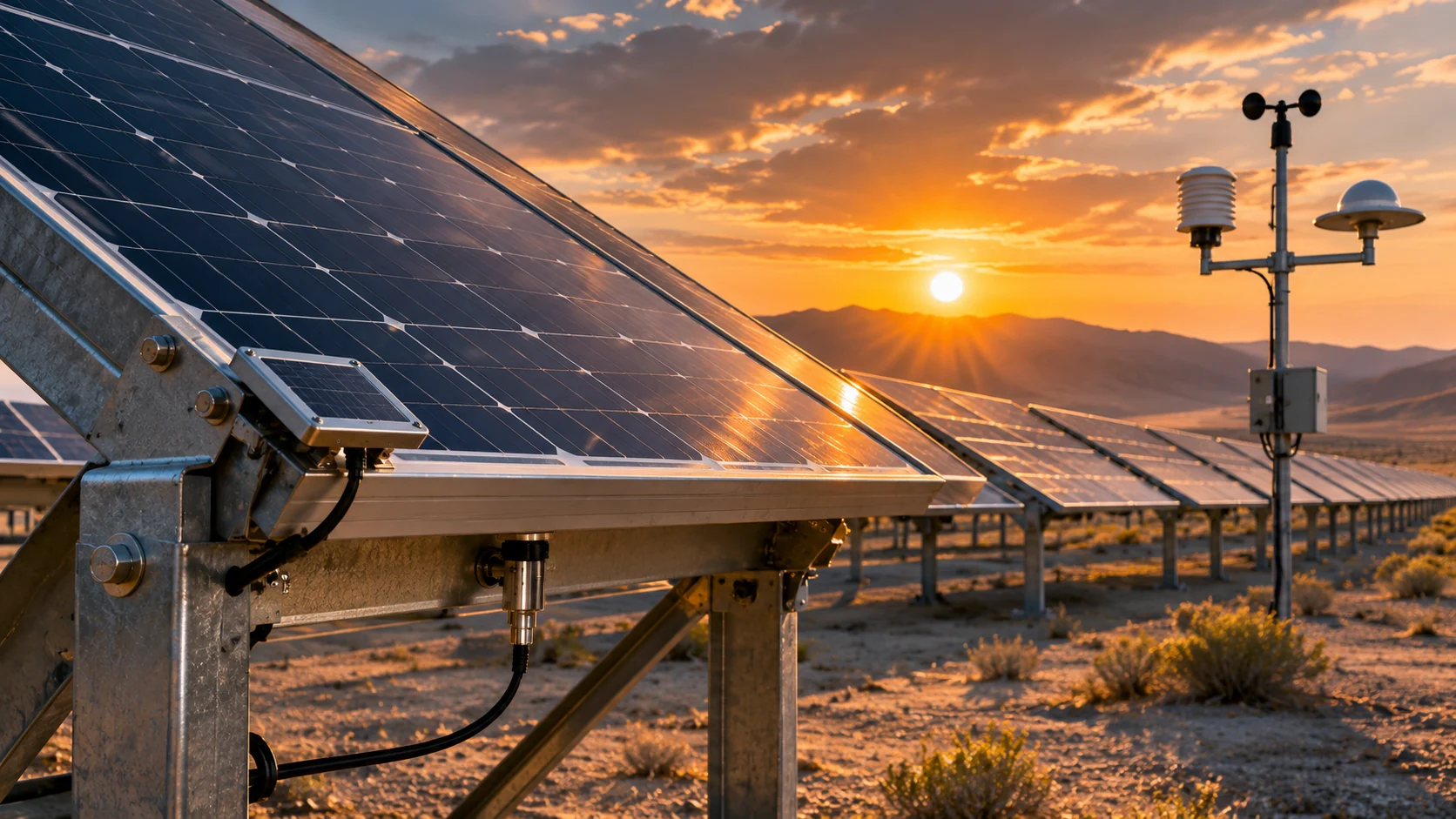
Independent original conceptual photograph of a photovoltaic array with solar performance measurement station at sunset
Illustrative category image · not a specific commercial product

WHAT THE SIGNAL MEANS

Measurement first.
Useful intelligence follows.

Solar power is a measurement-intensive environment: a plant needs to know not only how much energy it produced but how much sunlight it received, how hot the modules became and whether soiling or site conditions explain lost yield. Integrated sensing connects these quantities without making the sensing infrastructure the story.

Commercially established: PV electrical, irradiance, temperature and environmental monitoring. Emerging: more integrated, distributed and low-profile hardware.

SUNLIGHTPlane-of-array irradiance and spectral reference
TEMPERATUREModule back-sheet and ambient conditions
CONDITIONSoiling, wind, rain and electrical measurements

ENGINEERING AND APPLICATION

Where it works.
Where it must prove itself.

Each sensing discipline has a distinct measurement stack, operational setting and commercialization test.

What actually needs measuring

PV performance analysis combines electrical power with resource and environmental data. Useful measurements include plane-of-array irradiance, module and ambient temperature, current, voltage and operating conditions. Wind and soiling measurements become important where they materially affect output.

Where smaller or embedded sensing matters

Sensorized module frames, monitoring stations, reference cells and instrumented trackers can reduce the distance between a changing condition and the measured response. Transparent or low-profile instrumentation may be valuable when visibility, service access or corrosion complicate external boxes.

Commercial platform routes

Possible buyer categories include solar-monitoring hardware makers, environmental instrumentation firms, utility-scale performance analytics companies and OEMs integrating sensors into module and tracker systems. They buy accuracy, interoperability and serviceability—not an invented invisible-solar device.

The engineering and economic limits

Irradiance sensors require proper calibration and siting; back-sheet measurements may not equal cell junction temperatures; soiling proxies vary by site; and network availability matters. Savings must exceed instrumentation, installation, cleaning and calibration costs. A beautiful surface does not replace a traceable measurement.

COMMERCIAL CONTEXT

Potential buyers.
Specific operating needs.

Solar instrumentation OEMs · PV monitoring platforms · Renewable asset operators

Technical maturity

Commercially established: PV electrical, irradiance, temperature and environmental monitoring. Emerging: more integrated, distributed and low-profile hardware.

What a buyer funds

Reliable measurement, integration, validation and deployment support—not a sector label.

Independent identity

InvisibleSensors.com is a domain offering, not an operating manufacturer or equipment supplier.

INDEPENDENT TECHNICAL CONTEXT

Traceable principles.
Appropriate claims.

References support the application principles. No affiliation, product endorsement or clinical performance is implied.

DOMAIN ACQUISITION

InvisibleSensors.com

A premium digital identity available for strategic acquisition across advanced sensing and physical intelligence.

Submit a private enquiry ↗